
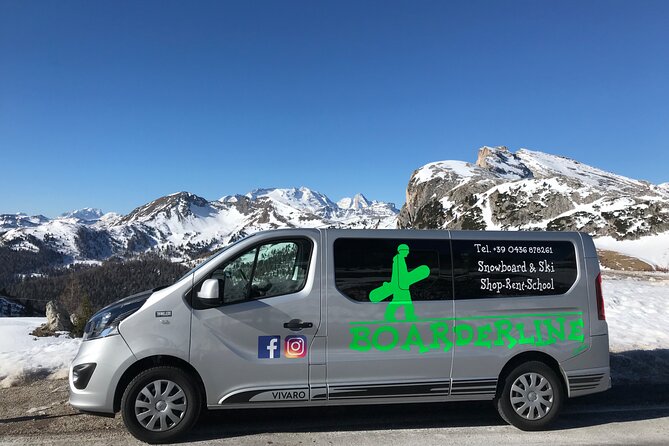
Review · CORTINA SKI TRIPS
Dolomiti and First World War Sites Ski Tour from Cortina d’Ampezzo
The mountains hold more than snow. This outing combines serious skiing with First World War sites around Cortina d’Ampezzo, taking you past trenches, forts, gun posts, parapets, and guard positions in one dramatic day. I like the small group size of no more than eight people, and I like that private transport, hotel pickup, and hotel drop-off are included.
I also like the chance to stop at a mountain refuge for traditional local food, though lunch and the ski pass cost extra. The main consideration is focus: this is not simply a scenic ski day. If your companions have little interest in military history, the long explanations and site visits may not suit everyone.
Key points to know before booking
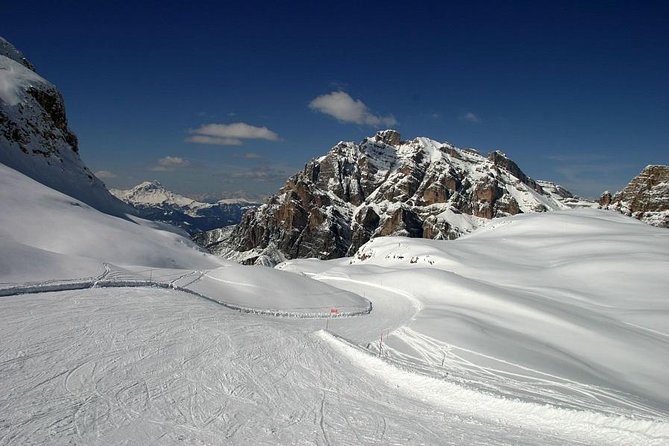
- Six hours on skis: The skiing portion centers on the First World War sites around Monte Col di Luna and the surrounding Dolomites.
- Small group format: A maximum of eight people makes it easier to stay together and ask questions.
- Five listed stops: The day includes Rifugio Lagazuoi, Marmolada, Centro Boarderline, Cinque Torri, and Livinallongo del Col di Lana.
- Transport is handled for you: A private vehicle collects you at your hotel and returns you there after the tour.
- Historic sites are part of the ski day: Expect trenches, forts, gun posts, parapet walks, and guard posts, not only mountain views.
- Budget carefully: The price is $473.39 per person, with lunch and the ski pass excluded.
Why this ski day is different from a normal Dolomites outing
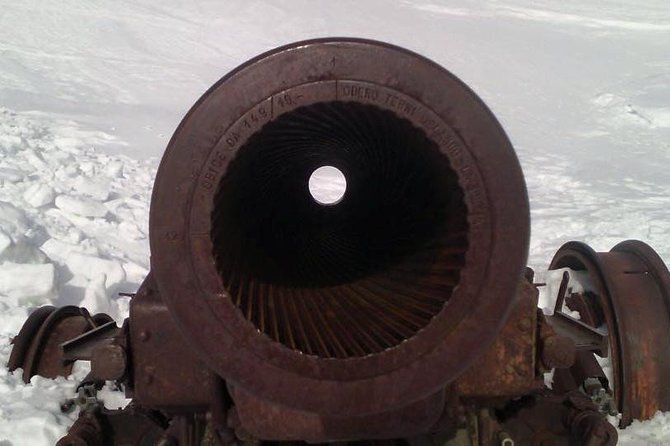
Many ski days in Cortina are about linking lifts, finding good snow, and stopping for a long lunch. This one uses the ski area as an open-air history lesson. The First World War was fought across these mountains, and the route brings you close to positions connected with those battles.
The setting can seem almost too beautiful for its subject. Jagged limestone peaks, wide snowfields, and high passes make a striking backdrop, but the remains of trenches and military positions give the day a darker edge. I think that contrast is the reason this experience can stay with you longer than a standard sightseeing tour.
The tour description calls the ski portion six hours, while the overall experience lasts about seven hours. That suggests most of the day is spent moving through the ski area, with some time for transport, explanations, and stops. You should be ready for a full day rather than a quick morning lesson.
A basic understanding of the First World War will help. You do not need to arrive as a military historian, but knowing that Italy and Austria-Hungary fought in these high valleys will make the forts, gun posts, and mountain positions easier to understand.
A few more snow days around Italy worth a look
- Private Ski Lessons in Livigno, Italy
★ 5.0 · 85 reviews - Lessons in Mini-Group – 3 hours a day – skiing
★ 5.0 · 22 reviews - Lessons in Mini-Group – 2 hours a day – Skiing
★ 5.0 · 18 reviews
Starting from Cortina at 8:30 in the morning
Pickup begins at 8:30 am, with collection in the lobby of your hotel. That is a useful arrangement in Cortina, where the day can start early and ski equipment can make local transport awkward. The private vehicle also means you do not have to work out how to reach each area on your own.
The group is limited to eight people. That is a good number for a guided ski day. It should be easier for the guide to keep the group together, explain the historical points, and adjust the pace than it would be with a large coach party.
The driver and guide arrangement is another practical benefit. The tour includes a driver-guide as well as a professional photographer guide. The supplied information does not specify exactly how the photography works, so I would treat this as an added service rather than assume a set number of edited images.
The experience is offered in English. Children must be accompanied by an adult, and you should have a moderate level of physical fitness. This is not presented as a beginner ski lesson, so you should be comfortable spending much of the day on skis.
Rifugio Lagazuoi and the mountain war
Rifugio Lagazuoi is the first listed stop, and it gives the day a strong opening. The name is closely tied to the First World War sites in the Dolomites, and the area is known for military remains high among the rock formations.
You can expect the guide to connect the scenery with the positions once used by soldiers. Trenches, forts, gun posts, parapet walks, and guard posts make the subject physical. Instead of hearing only dates and battle names, you are looking at the actual places where people lived, watched, and fought.
The main strength here is scale. A mountain position can look isolated on a map, but from the ski area you can understand how difficult movement and supply must have been. The cold, height, steep rock, and exposure explain why these battles were so deadly.
This is also where the day may feel less like ordinary skiing. You will need to pause for explanations and look closely at remains that may not be obvious beneath snow or rock. If you want nonstop downhill runs, that rhythm may frustrate you. If you want the mountains to explain the war, it is exactly the point.
Marmolada and the Grande Guerra museum
Marmolada adds another major setting to the route. It is one of the most important high mountain stops in the Dolomites, and the experience includes a visit to the Grande Guerra museum at the top of Mount Marmolada.
That museum visit matters because mountain remains can be scattered and difficult to interpret. A museum gives you a clearer framework for the objects, locations, and events connected with the fighting. It also provides a useful change of pace from skiing outdoors.
One practical detail is worth keeping in mind: not every part of the day is guaranteed to produce obvious relics. The experience focuses on First World War locations, but a previous account of the day noted that no visible relics were seen during the ski route, while the museum at Marmolada supplied the clearest historical material.
That is not a flaw, but it helps set expectations. You are not touring a preserved battlefield with displays at every turn. You are skiing through a large mountain region where history is often marked by terrain, ruins, and interpretation.
Same mountain, a different way to spend the day:
- Private Snowboard Lessons
★ 5.0 · 14 reviews - Ski Tour from Cortina d’Ampezzo: Tofana
★ 4.5 · 8 reviews - Dolomiti Ski Tour: Super 8 Lagazuoi and 5 Torri from Cortina d’Ampezzo
★ 4.0 · 7 reviews - Sellaronda Ski Tour
★ 4.5 · 6 reviews
Centro Boarderline and the local ski connection
Centro Boarderline appears as one of the itinerary stops and is also the company connected with the tour. It is useful to think of this as the local base for the experience rather than a historic monument.
The center is also associated with ski rentals, ski tours, maps, and help planning time in Cortina. That local role can be valuable if you are building a longer ski holiday and need advice beyond this single day.
Paolo and Giorgio are named as helpful members of the team, and Lorenzo is identified as the ski guide connected with the World War I tour. The personal service is one of the strongest reasons to consider booking through a local ski specialist instead of arranging every connection yourself.
You should still confirm what equipment is included before paying. The tour price covers private transport and guiding, but the supplied details do not say that skis, boots, helmets, or other equipment are included. The ski pass is specifically excluded.
Cinque Torri and the battlefield views
Cinque Torri is another memorable stop because the rock formations create one of the most distinctive settings in the Cortina area. Here, the value is not just the scenery. The route is designed to show how the natural formations and military positions worked together.
The area around Monte Col di Luna is highlighted as a place where deadly First World War battles were fought. Skiing around these peaks lets you see the defensive logic of the terrain. A ridge, rock tower, or narrow pass could control movement across a much wider area.
I would expect the guide to spend time explaining positions rather than rushing through them. The exact route can depend on ski conditions and operating arrangements, but the stated focus is on trenches, forts, gun posts, parapets, and guard posts.
Cinque Torri is likely to be one of the most photogenic sections of the day. The professional photographer guide is a welcome addition here, especially if you want photographs of both the mountain scenery and the historic sites. Still, the photography service is not explained in detail, so ask what is supplied before you book if photographs are important to you.
Livinallongo del Col di Lana and the wider war zone
Livinallongo del Col di Lana rounds out the route with another area tied to the First World War. Including it helps show that the fighting was not limited to one famous viewpoint or single fort.
This stop also reinforces the geographic scale of the tour. You are not visiting one monument and returning to Cortina. You are moving through several parts of the Dolomites connected by the same mountain war.
The appeal here is for anyone who wants a broader picture. You can compare different positions, slopes, and valleys while learning how the front spread across the region. The drawback is that the amount of information may feel heavy during a day that also asks you to ski.
That is why preparation pays off. Read a short account of the Dolomite front before you go, and the guide’s explanations will land with more force. You will also be better able to tell the difference between a fort, a gun position, a trench, and a simple mountain feature.
Lunch at a mountain refuge
A stop for lunch at a mountain refuge is part of the plan, with traditional local dishes expected to be available. Lunch is not included in the tour price, so bring extra money or confirm the accepted payment method before departure.
This is more than a practical food break. A refuge gives you time to warm up, rest your legs, and absorb the morning. Local dishes also make the day feel connected to the region rather than like a packaged military excursion.
You should allow for your own preferences here. The available food, prices, and timing are not specified, and the stop may be shaped by the ski route and conditions. If you have dietary restrictions, ask in advance rather than assume the refuge can accommodate them.
What $473.39 really buys you
At $473.39 per person, this is an expensive day if you compare it with a regular group ski outing. The price becomes easier to justify if you value private transport, a small group, local guiding, and a route that would be difficult to arrange independently.
Hotel pickup and drop-off remove a lot of planning. The private vehicle also lets the group connect several locations without managing separate transport. For a party of friends or family, the maximum group size of eight may make the cost feel more reasonable.
The biggest extra cost is the ski pass. Lunch is also separate, and equipment is not listed among the included items. You should calculate the complete day’s cost before booking, especially if you still need rentals.
I see the tour as good value for a skier who wants history built into the day. I see weaker value for someone who mainly wants maximum time on the slopes. That person may pay for guiding and historical stops that are not central to the holiday.
Who will enjoy this most
I would choose this tour if you:
- Already ski and can manage a full day on the mountain
- Want a guided route rather than a day spent finding sites alone
- Have a real interest in the First World War
- Appreciate small groups and private transport
- Want both museum time and outdoor mountain history
- Are happy to pay extra for lunch and a ski pass
I would hesitate if your group has mixed interests. The experience can work well for one history-minded skier, but it may not suit companions who want uninterrupted skiing. The long day also calls for a moderate fitness level and a willingness to stop often.
Families can book, but children must be accompanied by an adult. The available details do not give a minimum age or describe a special child rate, so ask the provider before committing.
Practical advice for a smoother day
Start with a clear idea of your ski ability. This is described as a ski tour, not a learn-to-ski program, and the day covers a broad area.
Bring enough clothing for long periods outdoors and for pauses at historic sites. The tour includes stops at high mountain locations, but the exact weather and snow conditions are not provided, so sensible mountain clothing is important.
Reserve the day early if you need a specific date, particularly if you want the smallest possible group. Confirmation is provided at booking, and changes or cancellations are accepted without charge up to 24 hours before the start time. After that point, the amount paid is not refunded.
Ask three questions before paying: what ski pass is needed, whether equipment can be arranged, and what the photography service provides. Those answers will give you a more accurate total price and help avoid surprises.
Should you book the Dolomiti First World War ski tour?
Book it if you want your Cortina ski day to carry some meaning beyond the next run. The combination of Monte Col di Luna, Lagazuoi, Marmolada, Cinque Torri, Livinallongo del Col di Lana, and the Grande Guerra museum gives you a serious look at the mountain front in a remarkable setting.
I especially like the small group, hotel transport, and local team connected with Centro Boarderline. Paolo, Giorgio, and Lorenzo are names worth remembering if you want help with ski planning as well as this tour.
Skip it if your priority is uninterrupted skiing or if your companions are not interested in wartime history. At $473.39 before lunch and the ski pass, this is a specialist experience. For the right skier, though, it offers a rare chance to read the mountains while moving through them.
FAQ
How long does the ski tour last?
The overall experience lasts approximately seven hours. The ski tour itself is described as lasting six hours.
What time does pickup begin?
Pickup begins at 8:30 am.
Where does hotel pickup take place?
You are collected in the lobby of your hotel.
Is transport included?
Yes. Transport by private vehicle, hotel pickup, and hotel drop-off are included.
Is lunch included?
No. Lunch is not included, though the route includes a stop at a mountain refuge for traditional local dishes.
Is the ski pass included?
No. The ski pass must be paid for separately.
How many people can join the tour?
The tour has a maximum of eight travelers.
Is the tour offered in English?
Yes. The experience is offered in English.
Can I cancel for a full refund?
Yes, if you cancel at least 24 hours before the experience start time. Cancellations made less than 24 hours before the start time are not refunded.
Just added around Italy
- Sellaronda ski & Snowboard Tour★ 5.0 · 2 reviews
- Freestyle Private Lesson – Snowboarding★ 5.0 · 3 reviews
- Freeride Private Lessons – Skiing★ 5.0 · 2 reviews
- Dolomiti Ski Tour: the Dolomites of Sesto from Cortina★ 5.0 · 2 reviews
- Hidden Valley Ski Tour★ 5.0 · 2 reviews
- Alleghe: Ski Private Lessons★ 4.7 · 5 reviews
- Sellaronda Ski Tour★ 4.5 · 6 reviews
- Dolomiti Ski Tour: Super 8 Lagazuoi and 5 Torri from Cortina d’Ampezzo★ 4.0 · 7 reviews
Ski Trips, compared.
2-Hour or Full-Day Slope Session at Ski Dubai
Read our review →
Eobi Ice Valley / Elysian Ski Resort / Nami Island
Read our review →
Browse the lists this tour appears in