
Review · CANADA SKI TRIPS
Learn to Cross Country Ski in Lake Louise
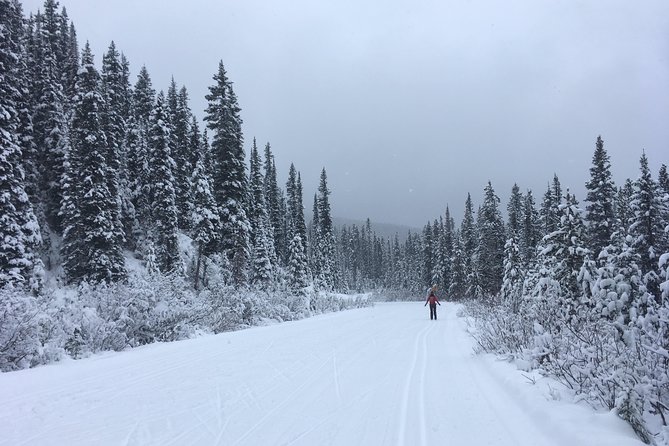
Start slowly, then let the Rockies open up. This five-hour Lake Louise outing is a friendly way to try cross-country skiing without being thrown straight onto a difficult route. You learn the basics first, including how to fall and get back up, then finish with a short ski tour led by a guide.
I like the small maximum group of six, which gives you room to learn at your own speed. I also like the personal encouragement built into the lesson, especially for adults who are unsure about their balance or fitness. The main drawback is that the price of $138.30 per person does not include equipment, transportation, or lunch, so your real cost will be higher if you need to rent skis.
Key points at a glance
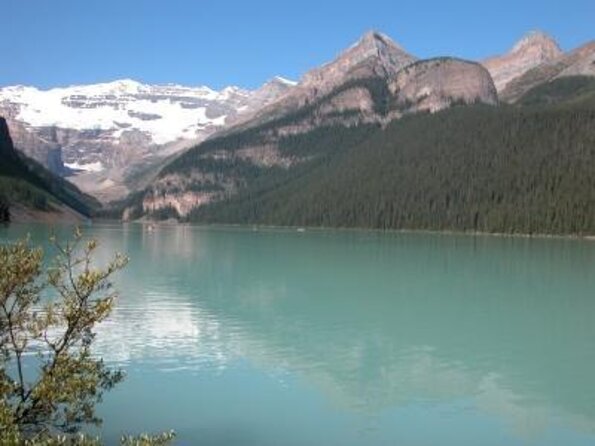
- Lake Louise is both classroom and scenery: You learn at the lakeshore, then ski toward the back of the lake for a more memorable outing.
- The lesson starts with the unglamorous essentials: Falling down, standing up, gliding, and stopping all get proper attention.
- Groups are capped at six people: That is a useful size for beginners who need help with balance, turns, or getting moving again.
- Rentals cost extra: Expect about $30 to $35 per person in Lake Louise, or $65 per person at Chateau Lake Louise.
- You are out over lunch: Bring food, a thermos, mittens, a toque, scarf, warm layers, and a day-pack.
- The route can include frozen falls and ice climbing: The exact outing depends on wildlife closures and Environment Canada weather warnings.
Why Lake Louise works for a first ski lesson
Lake Louise gives this lesson a setting that feels special from the first step. You are not learning in a featureless practice area and then being sent home. The goal is to get comfortable on skis and then use those skills on a short tour beside one of Alberta’s best-known mountain destinations.
That progression matters. Cross-country skiing looks simple until you try to control two narrow skis, poles, and your own momentum. The lesson covers the basics you need before heading farther out: how to stand, how to glide, how to stop, and how to recover after a fall.
The fall-and-recovery practice is especially useful. Beginners often worry more about getting back up than about skiing forward. By dealing with that problem early, the guide helps take some of the mystery out of the sport. You will likely fall at some point, and that is part of the lesson rather than a sign that you are failing.
The activity is offered in English and begins at 10:30 am. It lasts about five hours, so you should expect a full morning and early afternoon outside. That is long enough to learn at a sensible pace without making this a rushed introduction.
More Cross-Country Skiing in Canada:
- Lake Louise: Cross Country Skiing Lesson with Tour
★ 4.9 · 7 reviews - Tromsø: Cross Country Guided Skiing Course
★ 4.7 · 503 reviews - Breivikeidet: Cross-Country Skiing & Husky Visit
★ 4.9 · 257 reviews
What happens when you arrive at 10:30 am
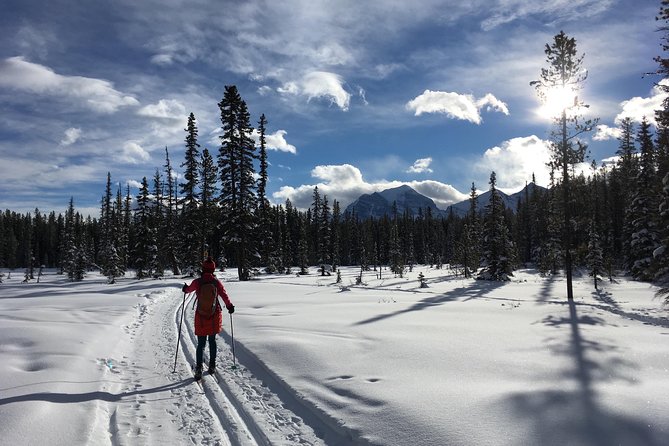
The meeting point is at the Lake Louise Lakeshore in Lake Louise, Alberta. You are responsible for getting there, since transportation is not included. Plan your arrival with enough time to sort out equipment and meet the guide before the activity begins.
Before skiing, you complete an orientation and sign a waiver, including a COVID release form. This is a practical start, not lost sightseeing time. You need to understand the plan, the conditions, and the responsibilities involved before heading onto the route.
The guide then introduces the basic movements. Expect instruction on standing on your skis, gliding forward, stopping, and recovering from a fall. Those skills sound modest, but they are the foundation of a comfortable day.
The teaching style appears especially suited to complete beginners. Shauna, one of the guides, is praised for putting a mature couple at ease and giving them the confidence to continue. That detail is important: you do not need to arrive as an athlete or already know how to ski, but you do need enough fitness for several hours outdoors.
Learning to fall, stand, glide, and stop
The first part of the outing is not about covering distance. It is about finding balance. You learn how the skis respond under your feet and how the poles help with rhythm and support.
The guide gives attention to the least glamorous but most useful skill, getting up after you fall. On cross-country skis, a fall can leave you awkwardly tangled in equipment. Knowing how to stand again saves energy and prevents a small mishap from turning into a stressful moment.
Stopping is another key lesson. A beginner who can move forward but cannot slow down will not feel relaxed on a tour. Practicing this early lets you focus later on the scenery instead of worrying about every small change in speed.
The guide also watches the pace of the group. With no more than six participants, it is easier to ask for a repeat demonstration or get help with a particular movement. A larger class might be cheaper, but it could leave you waiting for attention during the moments you need it most.
You should still keep your expectations realistic. This is an introduction, not a full ski-training program. You may finish with the basic confidence to continue skiing, but no five-hour lesson can remove every awkward moment. The value is in learning sound fundamentals and getting a guided taste of the sport.
The short tour toward the back of Lake Louise
Once the group has practiced the basics, the lesson becomes a short tour. This is where the experience gains more character than a standard skills class.
The route can take you toward the back of the lake, where you may see frozen falls and ice climbing. That is a memorable reward for the work done earlier. You are not only repeating drills in one place, you are using your new skills to reach a distinct part of the Lake Louise setting.
The frozen falls and ice-climbing views also give the outing a clear sense of purpose. For a beginner, it helps to have a destination in mind. You are more willing to keep practicing when each stretch of skiing leads to something worth seeing.
The exact route is not guaranteed. Wildlife closures or Environment Canada weather warnings can cause the activity to be cancelled. That is a sensible safety condition, but it means you should not treat the back-of-the-lake scenery as certain on every departure.
You also need to accept that skiing conditions affect the day. The supplied information does not promise a particular trail surface or snow quality, so the experience will depend on the weather and the conditions at the time. The guide handles navigation, which removes one major burden for a new skier.
A few more snow days around Canada worth a look
- Whistler Premium Ski Rental Package
★ 5.0 · 55 reviews - Whistler Development Ski Rental Package
★ 5.0 · 48 reviews - Whistler Intro to Backcountry Skiing and Splitboarding
★ 5.0 · 23 reviews - Jacques-Cartier National Park: Skiing Excursion
★ 5.0 · 22 reviews
Why a maximum of six makes a difference
The group size is one of the strongest features here. Six people is small enough for the guide to see how each person is managing, yet large enough to provide a little group energy.
Beginners often learn at different speeds. One person may pick up gliding quickly but struggle with stopping. Another may need repeated help after a fall. A small group allows those differences without forcing everyone into a single fast pace.
The guide’s role is not limited to pointing out the route. Instruction and navigation are included, so you can focus on skiing rather than wondering where to go next. That is particularly valuable at Lake Louise, where a new skier may be concentrating hard enough on balance already.
The experience may suit mature beginners better than a large, high-energy class. Shauna’s encouragement helped one mature couple feel capable despite their initial doubts. You should still have a strong physical fitness level, but you do not need to present yourself as an expert or an especially confident skier.
Equipment: what you bring and what you rent
You are expected to arrive with waxless Nordic skis, boots, and poles. If you already own suitable equipment, that keeps the day simple. If you do not, rentals are available, but they add to the cost and require some planning.
Rental prices are approximately $30 plus tax to $35 per person at Wilson Mountain Sports or Gear Up in Canmore. Chateau Lake Louise also offers rentals at about $65 per person, which is much more expensive.
That difference affects the value calculation. At $138.30 for the activity, adding a $30 to $35 rental brings the practical total to roughly $168.30 to $173.30 per person before tax and food. The Chateau option pushes the total much higher.
The least complicated choice may not be the cheapest one, so check the rental location that fits your plans. The experience does not include transportation, and the activity starts at the Lake Louise Lakeshore. You will want to make sure you can collect equipment and reach the meeting point on time.
The skis should be waxless Nordic skis. That detail matters because the equipment needs to match the lesson. Do not assume that any pair of cross-country skis will be suitable.
What to pack for five hours outside
You are out over lunch, so bring a day-pack with food. A thermos is also listed, which is a smart addition for a long period in winter conditions.
Pack the following:
- Lunch and a thermos
- Mittens
- A toque
- A scarf
- Warm layers
- Waxless Nordic skis, boots, and poles, unless you rent them
Layering is more useful than relying on one very heavy item. You may warm up during instruction and then cool down when stopping for food or scenery. The supplied guidance does not give a detailed clothing system, so use your judgment and prepare for a full day outdoors.
Good hand protection matters. Beginners spend time handling poles, getting up from the snow, and adjusting equipment. Cold fingers make all of those tasks harder.
A day-pack also keeps your hands free while skiing. Carry only what you need, since the activity involves movement rather than a stationary lesson.
Price, value, and the extra costs
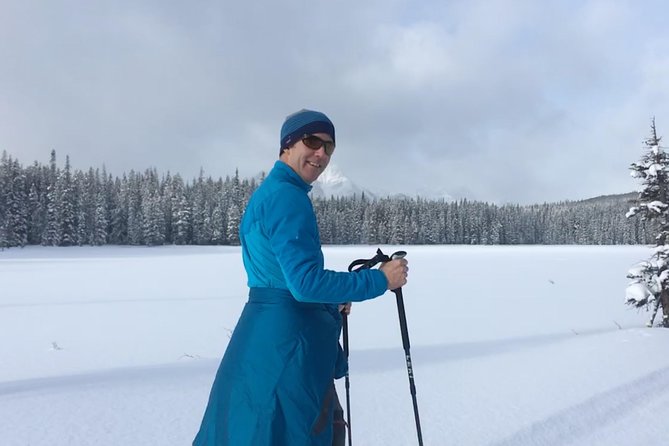
The listed price is $138.30 per person. For five hours of instruction, guiding, and a small group, that is a reasonable price for someone who wants a structured introduction rather than trying to teach themselves.
The strongest value comes from the personal instruction. You are paying for more than access to a snowy setting. The guide teaches you how to manage the skis, helps you recover from mistakes, and leads you on a short route once you are ready.
The total cost is less attractive if you need every extra. Add equipment rental at approximately $30 to $35 per person, lunch, warm clothing if you lack it, and your own transportation to Lake Louise. The Chateau rental price of $65 per person makes the outing notably more expensive.
Group discounts are available, which may help if you are booking with friends or family. The small group cap also gives the activity a more personal feel than a large introductory class.
I would judge the value this way: it is a good buy if you want instruction, scenic touring, and reassurance in one half-day. It is less appealing if you already ski confidently or only want a brief equipment rental and a self-guided outing.
Who should book this Lake Louise activity
This lesson is a good match for complete beginners, including adults who are unsure they can manage cross-country skis. The example of a mature couple gaining confidence with Shauna suggests that the atmosphere is patient rather than competitive.
It also suits you if you want a guide to handle navigation. You can spend your attention on learning instead of studying a route or worrying about where to turn.
You should have a strong physical fitness level. The activity lasts about five hours, takes place outdoors, and includes skiing with equipment. That does not mean you need advanced athletic ability, but you should be comfortable with sustained activity in cold conditions.
You may want to skip it if you dislike winter exercise, cannot carry lunch and warm clothing, or need a fully supplied package with transportation included. You should also reconsider if you are looking for downhill skiing, since this is a Nordic cross-country lesson.
Booking details and weather limits
Confirmation is provided when you book. The activity begins at 10:30 am at the Lake Louise Lakeshore and ends back at that meeting point.
The maximum group size is six, and the tour is offered in English. It can be cancelled because of wildlife closures or Environment Canada weather warnings, so keep your plans flexible if the weather is unsettled.
You can cancel up to 24 hours in advance for a full refund. That gives you some useful protection when arranging a winter outing, though it does not remove the need to watch conditions and prepare properly.
Should you book Learn to Cross-Country Ski in Lake Louise?
Book it if you want a calm, guided first experience with cross-country skiing and you value encouragement over speed. The small group, careful attention to falling and stopping, and possible outing to the frozen falls make this more than a quick introductory lesson.
The best candidates are beginners with a reasonable fitness level who can dress warmly, carry lunch, and arrange their own equipment or rental. Budget another $30 to $35 per person for standard rentals, or much more at Chateau Lake Louise.
I would be especially inclined to recommend it to mature beginners or nervous first-timers. The personal support described from Shauna is exactly what can turn a clumsy first hour into a day you remember fondly. If you already know how to ski, spend your money elsewhere. If you want to learn safely and see a memorable corner of Lake Louise, this is a sensible choice.
FAQ
Where does the cross-country ski lesson begin?
It begins at the Lake Louise Lakeshore in Lake Louise, Alberta, Canada.
What time does the activity start?
The start time is 10:30 am.
How long does the experience last?
The activity lasts approximately five hours.
Is transportation included?
No. Transportation is not included, and the activity ends back at the original meeting point.
Are ski rentals included in the price?
No. Rentals are extra and cost approximately $30 to $35 per person at Wilson Mountain Sports or Gear Up in Canmore. Chateau Lake Louise rentals are approximately $65 per person.
What equipment should I bring?
Bring waxless Nordic cross-country skis, boots, and poles unless you arrange rentals.
What should I pack for the day?
Bring a day-pack with lunch, a thermos, mittens, a toque, a scarf, and warm layers.
How many people can join the group?
The group has a maximum of six participants.
Just added around Canada
- Whistler Premium Snowboard Rental Package★ 5.0 · 3 reviews
- Montreal Epic Ski Adventure in Quebec’s Winter Wonderland★ 4.0 · 5 reviews
- Lake Louise: Cross Country Skiing Lesson with Tour★ 4.9 · 7 reviews
- From Toronto: Blue Mountain Day Trip Skiing Snowboarding★ 4.0 · 4 reviews
- Whistler Development Snowboard Rental Package★ 5.0 · 7 reviews
- Banff Performance Ski Rental Including Delivery★ 5.0 · 10 reviews
- Jacques-Cartier National Park: Skiing Excursion★ 5.0 · 22 reviews
- Montreal: Guided Skiing in Quebec Forests★ 5.0 · 12 reviews
Cross-Country Skiing, compared.
Cross-Country Ski Lesson for Beginners in Tromso
Read our review →
4 Hour Beginner Cross Country Skiing in Grand Teton
Read our review →
Browse the lists this tour appears in