
Review · CANADA SKI TRIPS
Lake Louise: Cross Country Skiing Lesson with Tour
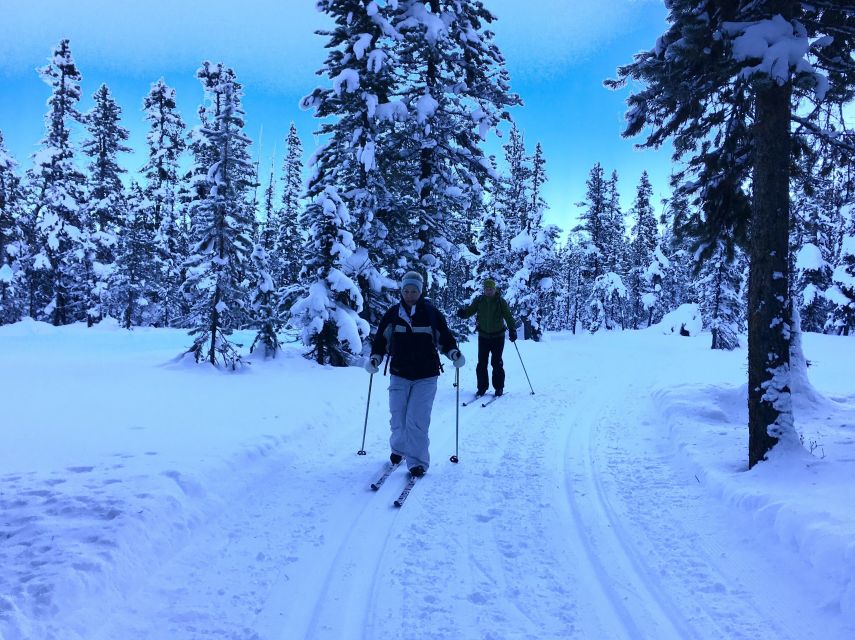
Lake Louise rewards a slower kind of adventure. This five-hour outing combines beginner cross-country ski instruction with a guided tour around one of Alberta’s best-known mountain settings. I like the small group limit of four, and I like that the lesson covers useful basics, from falling safely to stopping and getting back up. The main catch is that ski equipment costs extra, so the $146 price is not your full day’s expense.
You meet at 10:30 AM by the public washrooms in the Lake Louise parking area, then spend the morning learning before skiing through the afternoon. Personal tuition is the strongest part of the experience, with Shauna receiving special praise for taking time to make sure beginners understood the basics. Still, this is not a casual sightseeing walk. You need warm winter clothing, proper skis, and enough stamina for several hours outside.
Key points to know before you go
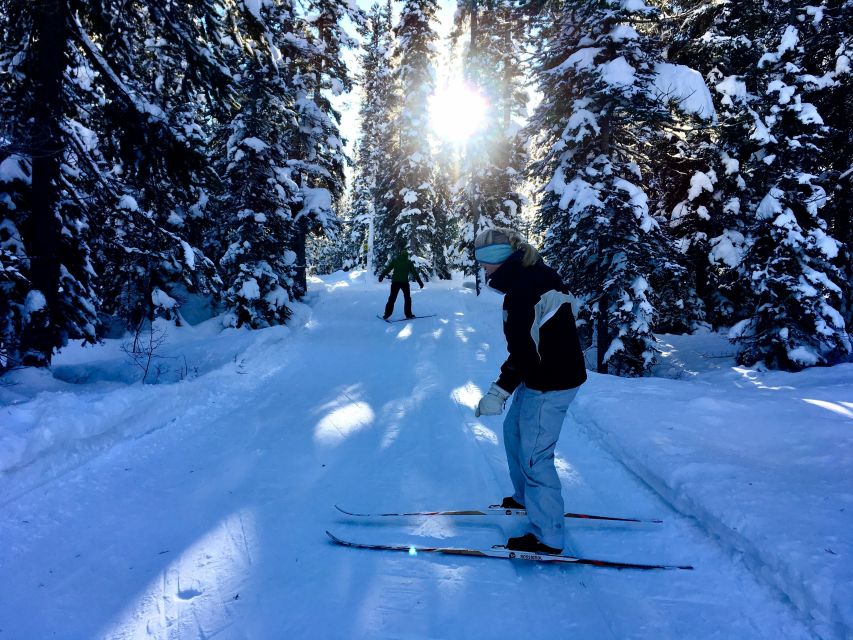
- Small groups keep the lesson personal: The maximum group size is four participants, useful when you need help with balance, turns, or getting up after a fall.
- The lesson suits beginners and returning skiers: You work on gliding, stopping, falling, and standing up before heading out for the longer tour.
- You ski beside iconic Lake Louise: The setting gives the activity its appeal, even though the focus remains on learning a practical winter skill.
- Equipment is not included: Bring waxless cross-country skis, boots, and poles, or budget for a rental from Lake Louise or Canmore.
- Lunch happens during the outing: Pack food and carry it with you, since the five-hour schedule runs across midday.
- The activity is for ages 14 and up: It is not suitable for children under 14, wheelchair users, or people with mobility impairments.
Meeting at Lake Louise at 10:30 AM
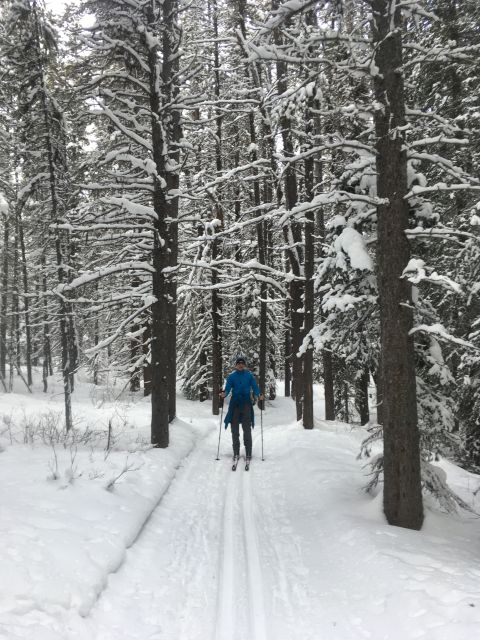
Your morning begins at the public bench in front of the washrooms in the Lake Louise parking area. This point matters because the meeting place is not simply the lake shore or the famous hotel. Look for the bench by the public washrooms, and allow enough time to find the correct road and parking area.
At the start, you sign a waiver and medical form. You also receive an orientation before the lesson begins. This is a useful pause, not wasted time. Cross-country skiing looks gentle when you watch an experienced skier glide past, but beginners quickly discover that thin skis and slippery snow require a different balance from downhill skiing.
The guide uses this early period to explain what you will do and how the session works. You should arrive already dressed for winter, rather than treating the parking area as a place to finish getting ready. Warm layers, waterproof outer clothing, gloves or mittens, a hat, and a neck warmer are specifically recommended.
You also need hand sanitizer or tissues, winter sports gear, and a packed lunch. A medical mask is listed among the suggested items as well. The important point is simple: you will be outdoors for much of the day, and Lake Louise weather can make a mild forecast feel very different once you are standing still during instruction.
More Cross-Country Skiing in Canada:
- Learn to Cross Country Ski in Lake Louise
★ 5.0 · 2 reviews - Tromsø: Cross Country Guided Skiing Course
★ 4.7 · 503 reviews - Breivikeidet: Cross-Country Skiing & Husky Visit
★ 4.9 · 257 reviews
Learning the basics before the tour
The lesson is designed for a first-timer or for someone who has not skied in a while. You begin close to Lake Louise, learning the movements that make the later tour possible.
The instruction includes:
- How to glide on Nordic cross-country skis
- How to stop
- How to fall safely
- How to get back up
- How to manage yourself in ski boots and equipment
That list tells you something important about the tone of the session. This is not a quick demonstration followed by a long independent ski. The guide gives you time to deal with the awkward parts that beginners often face.
Getting up after a fall is especially practical. On narrow cross-country skis, simply standing can be harder than expected, particularly if you are wearing layers and carrying a day pack. Learning the technique early can save embarrassment and energy later.
The small group size is a real advantage here. With no more than four participants, the instructor can watch your stance and offer direct corrections. Personal tuition was praised strongly, and that makes sense for this kind of activity. A large class can leave beginners waiting while someone else receives help. Here, you have a better chance to ask questions and repeat a movement before moving farther from the starting point.
The experience is taught in English. If you are comfortable receiving outdoor instruction in English, the language setup is straightforward.
The first two-hour tour around Lake Louise
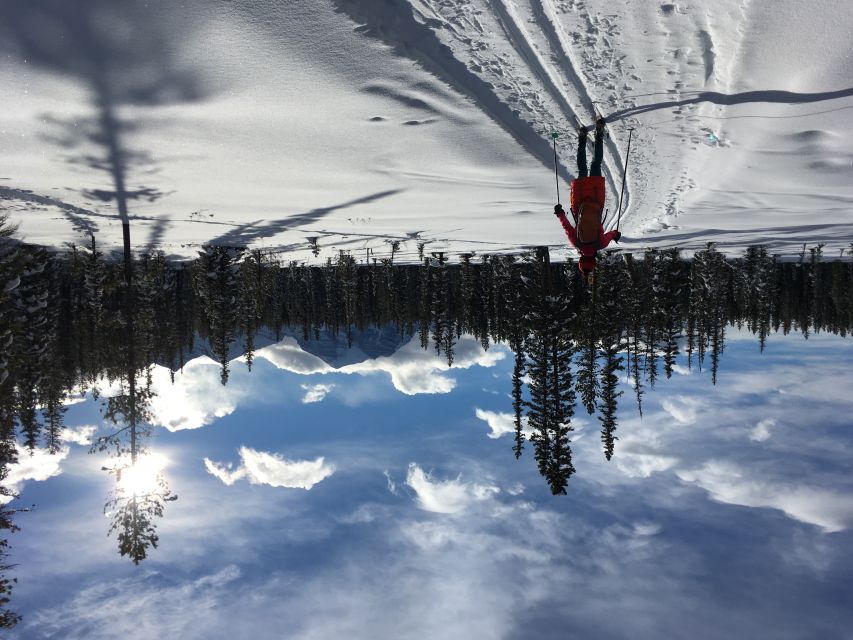
After the safety briefing and lesson, the outing moves into a guided tour lasting about two hours. The setting is the main reason to choose this activity rather than a basic ski lesson at home.
Lake Louise gives you an instantly recognizable Rocky Mountain backdrop. You are not just practicing on an anonymous track. The guide leads you through the area, allowing you to apply the morning’s skills while taking in the scenery around the lake.
Keep your expectations sensible. The information provided does not promise a particular trail, a fixed viewpoint, or a route around the entire lake. Snow conditions, trail conditions, and the group’s ability can affect where you go. Think of this as a guided ski tour near Lake Louise, not a guaranteed landmark checklist.
The guide’s presence matters during this part. You may still be working out how much pressure to place on the skis or how to slow down without losing balance. A local instructor can help you make adjustments as the terrain changes. You should not expect to ski at the pace of an expert group.
The two-hour block also means the experience has room to feel like an outing, not only a class. You can practice the basics, gain confidence, and see how cross-country skiing feels once you are moving for longer stretches. For a beginner, that progression is valuable. You first learn a movement, then use it in the setting where the activity makes sense.
The quiet break and secret stop
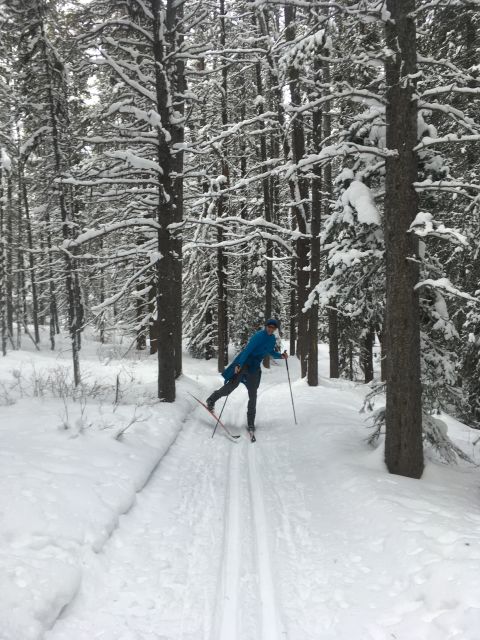
The schedule includes a 25-minute break at a secret stop. The exact location is not provided, so you should treat this as a planned pause rather than a promised attraction.
This break gives your legs a chance to recover and creates time to eat part of your lunch. Since the tour runs over midday, bring food with you. Do not count on buying lunch during the activity or returning to the parking area for a meal.
A short stop is also useful for adjusting clothing. Cross-country skiing can make you warm while moving, then cold when you stop. You may want to open a jacket during the ski and close it again at the break. Gloves, mittens, and a neck warmer are not minor extras here. They make the pause more comfortable.
The phrase secret stop adds a little mystery, but the practical value is the rest itself. You will appreciate 25 minutes more than you might expect after the lesson and the first long tour.
More Ski Lessons in Canada:
- Private Ski Lessons – 3 hours Zermatt
★ 5.0 · 279 reviews - Tromsø: Learn to Ski – Developed With Local Olympic Champion
★ 4.9 · 187 reviews - Cross-Country Ski Lesson for Beginners in Tromso
★ 5.0 · 180 reviews - Private Ski Lesson in Bulgaria
★ 5.0 · 92 reviews
A second two-hour ski tour
After the break, you spend another two hours on a guided tour at Lake Louise. This second stretch is where the lesson begins to pay off.
By this point, you should know the basic rhythm of gliding and stopping. You may still be learning, but you are no longer trying to understand every movement at once. The guide can help you refine your technique and keep the group moving at a manageable pace.
The afternoon section also gives you more time to decide if cross-country skiing suits you. A short trial can be fun without telling you much. Four hours of guided skiing, split by a break, gives you a clearer idea of the physical effort and the appeal of the sport.
That length is also the main physical consideration. The outing is five hours in total, with roughly four hours of guided touring plus the lesson, safety briefing, and break. If you are not used to winter exercise, you should arrive rested and prepared to work. The experience is not suitable for people with mobility impairments, and wheelchair users cannot take part.
You should also know that the tour is aimed at participants aged 14 and older. Families with younger children will need a different activity.
Equipment costs change the value
The price is $146 per person, and instruction from a local guide is included. Cross-country skis, boots, and poles are not included.
That makes the price reasonable for someone who values close instruction and a small group, but you need to add rental costs before comparing it with other winter activities. The available rental guidance gives you several price points:
- Chateau Lake Louise rentals cost $60 per person.
- Gear Up in Canmore offers rentals for $30 per person.
- Wilson Mountain Sports in Lake Louise rents equipment for $29 per person.
These options can change the total by a noticeable amount. Renting at Chateau Lake Louise is the easiest choice if you are already there, but it is the most expensive figure provided. Canmore and Wilson Mountain Sports may cost less, though you need to arrange your timing and transport yourself.
Bring waxless cross-country skis, boots, and poles. The word waxless matters because the wrong type of ski will not suit the activity. If you already own suitable equipment, the $146 price is easier to justify. If you need the most expensive rental option, the full outing costs considerably more.
The value comes from the instruction, the four-person maximum, and the setting. You are paying for more than access to snow. You receive coaching that starts with basic safety and continues into a guided ski experience. If you only want to try skiing for a short time, the cost may feel high. If you want a proper introduction in Lake Louise, it makes more sense.
What to wear for a long winter morning
Dress for changing comfort rather than one fixed temperature. You need warm, waterproof layers, outdoor clothing, gloves or mittens, a hat, and a neck warmer.
Avoid treating this like a quick walk from a car to a scenic viewpoint. You will be outside through instruction, the first tour, a break, and the second tour. Your clothing needs to keep you warm during slow periods and dry while you are moving.
Pack your lunch in a way that is easy to carry. The schedule crosses lunchtime, and the activity information specifically tells you to bring food. A small, practical pack is better than anything bulky that could interfere with balance.
You should also come with the right mindset. Falling is included in the learning process. The instructor teaches you how to fall and get up, so a beginner should not view a tumble as failure. It is one of the skills you are there to learn.
Who will enjoy this Lake Louise ski lesson?
I would recommend this for an adult or teenager aged 14 and up who wants a gentle introduction to cross-country skiing rather than a fast, independent day on the trails.
It suits you especially well if:
- You are a complete beginner.
- You have skied before but need a refresher.
- You prefer a small group to a crowded class.
- You want mountain scenery as part of the lesson.
- You are willing to spend several hours outdoors.
- You can arrange your own equipment.
The outing may not suit you if you want downhill skiing, a short photo stop, or a completely relaxed sightseeing activity. It also may not suit you if you dislike winter exercise or need wheelchair access.
The most useful praise concerns personal tuition. Shauna is described as an excellent instructor who took time to make sure the basics were understood. That is exactly what I would want from a first cross-country ski lesson. Good technique early on can make the rest of the day more enjoyable and less tiring.
Booking flexibility and practical details
You can cancel up to 24 hours before the activity for a full refund. You can also reserve the spot and pay later, which helps if you are still arranging winter plans around weather and equipment.
The activity runs for five hours, but you should check the available starting time when booking. The stated meeting time is 10:30 AM, so plan around a full morning and afternoon rather than expecting to finish quickly.
The group is limited to four people, and instruction is in English. Equipment is separate, and you are responsible for arriving with the correct winter gear or arranging a rental.
Should you book it?
Book this Lake Louise cross-country skiing lesson if you want patient instruction, a very small group, and a full half-day in the Rockies. The lesson covers the skills that beginners actually need, and the two guided tour sections give you time to use them around the lake.
Before booking, price the equipment and decide if you are ready for five hours outside. The experience is best for people who want to learn a winter sport, not simply admire the view. If that sounds like you, the personal coaching and Lake Louise setting make the $146 fee a fair starting point, provided you account for rental costs.
FAQ
Where does the Lake Louise cross-country ski activity meet?
Meet at the bench in front of the public washrooms in the Lake Louise parking area. The provided map pin marks the meeting location.
What time does the activity start?
The meeting time is 10:30 AM. You should check availability when booking because starting times can vary.
How long does the experience last?
The experience lasts five hours.
Is cross-country ski equipment included?
No. You need waxless cross-country skis, boots, and ski poles, or you must arrange a rental.
How much does equipment rental cost?
The provided rental prices are $60 per person at Chateau Lake Louise, $30 per person at Gear Up in Canmore, and $29 per person at Wilson Mountain Sports in Lake Louise.
Is the activity suitable for beginners?
Yes. The instruction covers falling, getting back up, gliding, and stopping. It also works as a refresher for people with previous experience.
How many people can join the group?
The group is limited to four participants.
What language is the instruction in?
The instructor teaches in English.
What should I bring?
Bring warm waterproof layers, a hat, gloves or mittens, a neck warmer, outdoor clothing, winter sports gear, and a packed lunch. Hand sanitizer or tissues and a medical mask are also listed among the suggested items.
Is the activity suitable for children and wheelchair users?
The activity is not suitable for children under 14, wheelchair users, or people with mobility impairments.
More Workshops in Canada
- Yongpyong Ski Resort from Seoul with Optional Lesson and Packages
★ 5.0 · 217 reviews - Sierra Nevada: Ski or Snowboard Lesson with Instructor
★ 4.3 · 130 reviews - Skiing in Farellones Park: Ski Tickets, Lessons, Transportation and More
★ 4.5 · 86 reviews - Private Ski Lessons in Livigno, Italy
★ 5.0 · 85 reviews
Just added around Canada
- Whistler Premium Snowboard Rental Package★ 5.0 · 3 reviews
- Montreal Epic Ski Adventure in Quebec’s Winter Wonderland★ 4.0 · 5 reviews
- Learn to Cross Country Ski in Lake Louise★ 5.0 · 2 reviews
- From Toronto: Blue Mountain Day Trip Skiing Snowboarding★ 4.0 · 4 reviews
- Whistler Development Snowboard Rental Package★ 5.0 · 7 reviews
- Banff Performance Ski Rental Including Delivery★ 5.0 · 10 reviews
- Jacques-Cartier National Park: Skiing Excursion★ 5.0 · 22 reviews
- Montreal: Guided Skiing in Quebec Forests★ 5.0 · 12 reviews
Ski Lessons, compared.
Learn to Ski – Developed With Local Olympic Champion
Read our review →
Cross-Country Ski Lesson for Beginners in Tromso
Read our review →
Private Ski Instructor from Lucerne including Transport
Read our review →
HALF DAY 3-Hour Private Ski Lessons in Zermatt, Switzerland
Read our review →Learn to Ski – Developed With Local Olympic Champion
Read our review →
Browse the lists this tour appears in